

Vatican to investigate “presumed miracle” attributed to Blessed Louis and Zélie Martin, the parents of St. Thérèse of Lisieux. Will the healing of little Carmen make them saints?
/Eight doctors testify to the “astonishing recovery, without any medical explanation,” of a little girl, born prematurely in Spain, who is now four years old.
by Maureen O'Riordan for "Saint Therese of Lisieux: A Gateway"

On Tuesday, May 21, 2013, Mgr Carlos Osoro Serra, Archbishop of Valencia, presided at the closing session of the diocesan tribunal which had investigated the “presumed miracle” of the healing of a baby girl, known as Carmen, who was born prematurely on October 15, 2008. Her cure was attributed to the intercession of Blessed Louis Martin and Zélie Guérin, the parents of St. Thérèse of Lisieux.

The closing session took place in the Gothic hall of the Archbishop’s palace. Two French bishops traveled to Spain for the ceremony. Mgr Jacques Habert, bishop of Séez, was present: Alençon, where Louis and Zélie spent their married life, is in the diocese of Séez. Father Thierry Hénault-Morel, rector of the Basilica of Notre Dame in Alençon, where Zélie and Louis were married and where their daughter Thérèse was baptized, joined Bishop Habert.
Mgr. Jean-Claude Boulanger, bishop of Bayeux and Lisieux, also traveled to Valencia for the ceremony. After Zélie died in 1877, Louis moved to Lisieux, in the diocese of Bayeux and Lisieux, and lived there until he died in 1894. Bishop Boulanger was joined by Mgr Bernard Lagoutte, rector of the Basilica in Lisieux built in honor of Louis and Zélie’s famous daughter, St. Thérèse. It was in this Basilica that, after the Church had accepted the healing of a newborn baby in Italy, Pietro Schilirò, as a miracle worked at their intercession, Louis and Zélie were beatified on October 19, 2008.
Story of the miracle
The little Carmen, whose family prefers to remain anonymous, was born at "October 9 Hospital" in Valencia on October 15, 2008, four days before Louis and Zélie were declared blessed. Father Antonio Sangalli, O.C.D., an Italian Carmelite friar who is vice-postulator of the cause of Louis and Zélie, later remarked: "Apparently, nothing seems to connect the two events, but later faith allowed us to discover the mysterious ties that point to a “miracle." Born after only six months of pregnancy, Carmen had many life-threatening health problems.

Father Sangalli told the tribunal on Monday that the child “suffered multiple pathologies, among them, a double septicemia and an intraventricular cerebral Grade IV hemorrhage, the most severe.” The doctors could do nothing for her, and her parents were told to prepare for the worst. Her father and mother, “seeing the danger of death, immediately turned to God, and, thanks to the nuns of the Discalced Carmelite Monastery of Serra, the parents, family, and friends started a novena to the blessed Martin spouses,” continued Father Sangalli. The Carmelites gave the child’s parents a prayer card with images of Zélie and Louis and a prayer for their canonization, and the nuns joined Carmen’s family and their friends in a sustained prayer for her healing. Father Sangalli explains:
“This is how it started: a real and intense communion of prayer of the family, of friends, of the monastery of Serra, of all those concerned for little Carmen, who was fighting against a sure death.” As soon as the novena began, the baby began to get better, culminating in her “astonishing recovery, without any medical explanation.”
The vice-postulator investigates the "presumed miracle"
Father Sangalli learned of the presumed miracle through one of his Carmelite brothers. He relates: "January 17, 2009 I was returning to France after a stay in Rome to deliver a reliquary to Benedict XVI. It was at this time that I met Father José Castellá, rector of the Sanctuary of Saint Therese [in Lleida, about three hours from Valencia], who spoke to me about a presumed miracle. Then I talked to the child's father and her grandparents, who were there with Ismael, Carmen's brother. They had come from Valencia, a round trip of 650 kilometers, to thank Louis and Zélie for saving Carmen from a sure death. And, immediately I had the sensation of being in front of a truly unusual event that deserved a deeper investigation. I contacted the person in charge of the cause of canonization of the Blessed Martins and he asked me to undertake all that was necessary to verify the presumed cure."
Later that same year, from November 6 to November 11, 2009, Father Sangalli visited Valencia for the first time. He wanted to begin a preliminary study of the case and to establish a definitive diagnosis about Carmen's presumed cure. Carmen's family "always collaborated, and all they sought was to thank God for Carmen´s cure." A year later (November 8 to 12, 2010) Father Sangalli visited Valencia again. He noted “Carmen´s new and surprising progress." Still, to get a precise scientific picture, Carmen's family traveled to Italy from July 6 to 13, 2011. "The child underwent a series of scientific tests and had no consequences from the cerebral hemorrhage that she had suffered," Father Sangalli explained. In September 2012 Father Sangalli got in touch with Archbishop Osoro about the healing that had taken place in his diocese. On December 8, 2012, the feast of the Immaculate Conception, he asked Archbishop Osoro to open the diocesan phase of the process to inquire into the miracle.
The diocesan process opens
On January 7, 2013, Archbishop Osoro presided at the opening of the canonical process to investigate whether Carmen’s recovery was a miracle obtained through the intercession of the Martin spouses. Father Sangalli stated that during the sessions “eighteen testimonies have been heard: Carmen´s parents and grandparents, her teacher, a priest, four Carmelite nuns of Serra, and eight doctors.”
Every one of the eight doctors from Valencia testified before the tribunal that Carmen’s recovery is “scientifically inexplicable.” Six of them had witnessed her healing at the time; two were appointed later by the tribunal that has investigated the miracle. The supervising judge of the tribunal, Monsignor Ennio Apeciti, said that all eight doctors “joined in agreeing that, due to her severe health problems, the little girl should [medically speaking] have died. All the physicians were astonished that Carmen survived. They also believed that, due to her condition, she should have suffered significant physical and psychological consequences forever.” They were astounded at Carmen’s “sudden, complete and lasting” cure. Monsignor Apeciti added that she is “completely healthy” today. Read more about Carmen's story.
The diocesan process closes
Little Carmen was present at the closing session on May 21 with her parents and other family members. The Carmelite nuns of Serra also participated.
Watch a video (1:55) of the closing session. You see the little Carmen waving at the photograph ofLouis and Zélie and four of the Carmelite nuns who suggested the novena to Carmen’s parents and prayed it with them.
At the closing session Archbishop Osoro gave “thanks to the Lord for this fact that we want to present to the Holy Father as a miracle worked for Carmen.” He called the way Carmen’s parents have acted “a precious gesture,” “because you believed in the intercession of the Blessed and, through their hands, you put your daughter into the hands of God.”

Archbishop Osoro acknowledged the conduct of the community of the Carmelite nuns of Serra during the whole process, saying “through you we see how God is made present.” He called Blessed Zélie and Louis “a reference, and an example to imitate, who lived in constant attention to God and attentive to his signs and preferences.”
What does the closing of the diocesan process mean for the cause of the canonization of Blessed Louis and Zélie Martin?
It is an important advance toward sainthood for Louis and Zélie. Father Sangalli explained that the court constituted in Valencia to guide the process in its diocesan phase “does not pronounce, does not announce a position on the authenticity of the miracle, but on the seriousness of the collected documentation.” The final decision to name saints is always made in Rome.
That the court closes the diocesan inquiry and sends the cause to the Vatican to continue its investigation is a “significant advance for the process,” as Father Sangalli noted. He reminded us that, if the diocesan court of canonization does not find enough indications of authenticity or rigor in investigating a presumed miracle, the court has authority to stop the process.
What happens next?
Now that the diocese of Valencia collected documents, examined witnesses, and completed its inquiry, Father Sangalli, as vice-postulator, is charged with taking the documentation immediately to Rome to submit it to the judgment of the Congregation for the Causes of Saints. There it is to be examined first by doctors, then by theologians, and finally by bishops and cardinals. If the Congregation recommends to Pope Francis that Zélie and Louis should be named saints, the way will be open for their canonization.
The influence of Louis and Zélie
Mgr Lagoutte, the rector of the Basilica at Lisieux, told those present at the closing session that Blessed Louis Martin and Zélie Guerin continue to be “very active.” The Shrine at Lisieux receives testimonies from “spouses from all over the world” who had been unable to have children but have have succeeded “thanks to their intervention.”
The pastoral significance of Zélie and Louis
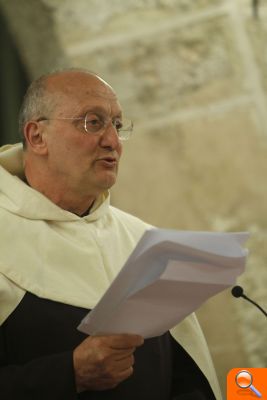
Father Sangalli remarked that the Martins had "an exceptional marriage. They educated not only the most famous of their five children, Thérèse, but also the other four, particularly Léonie, a complicated daughter, who had problems.”
“We have just concluded the investigation of Carmen´s cure and have sent it to the Congregation for the Causes of the Saints in Rome. We hope that the Blessed French spouses follow their daughter, Saint Therese of the Child Jesus, so that these Blessed parents can, if God permits, be canonized by Peter´s successor, Pope Francis . In this Year of The Faith, the Christian testimony of this marriage: educator, teacher of faith and sanctity, presents issues that are clearly relevant for the whole Church
Bishop Boulanger of Lisieux pointed out that “The Lord has given us these spouses to accompany today’s families.” The Discalced Carmelite nuns of Serra noted that “the Martin marriage is essential in a society as individualistic as our contemporary society. The Martins were the example of union and of how to live spirituality as a family.”
Father Sangalli urged everyone to “repeat with force that the Martins are a special marriage, an example to our families today. They are teachers in the field of faith, of education to domestic, ecclesial, and social sanctity.”
Sources:
- "Ocho médicos testifican en la curación “inexplicable” de una niña valenciana de 4 años que investiga la Iglesia como presunto milagro"atelperiodic.com, 21/05/13.
- "Sangalli: ´Los Martín son especiales'" by M. Ros, Valencia for Levante: El Mercantile Valenciano 26.05.2013 | 01:36
- "Historia de un milagro," by Mónica Ros, Valencia, for Levante: El Mercantile Valenciano 26.05.2013 | 01:36
- Ocho médicos testifican, “asombrados”, por un posible milagro en la curación inexplicable de una niña valencianaAtribuido a la intercesión de los padres de santa Teresita de Lisieux, ya beatificados by Eduardo Martinez 23-05-13 for Paraula
I am deeply grateful to my fellow apostle, Teodolinda Garcia of Panama, for translating the Spanish sources. I thank elperiodic.com for permission to display the photos.
var addthis_config = {"data_track_addressbar":true};


